

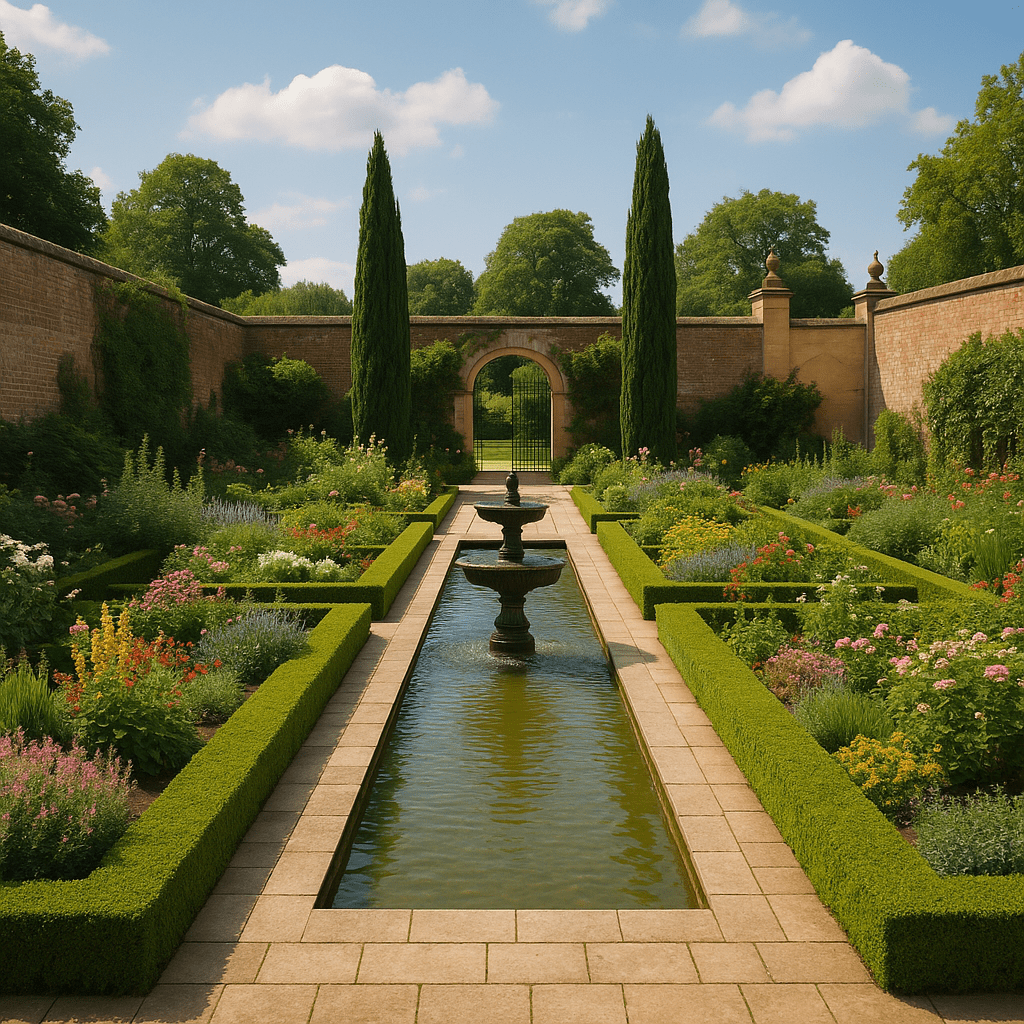
Walled Gardens and the Return of Aristocratic Access
Last week I visited one of the region’s largest and most notable plant nurseries. Though it was a weekday, it was busier than expected. Delivery trucks were offloading fresh shipments, carts clattered down the greenhouse aisles, and new plants were being organized into rows. Most of the customers were older couples or individual women, carefully selecting their finds. Aside from the employees, there were hardly any young people.
This visit drew my attention to a modern cultural phenomenon: many women still aspire to create a kind of walled garden—a private sanctuary for beauty, peace, and renewal. And while women are fully capable of building, designing, and tending these spaces, it is often men who are expected to lay the stone, move the rock, and construct the framework. In an era when private homes and land ownership were more affordable, this dream was attainable for the average household. Each person could build their own little paradise around their “castle.”

But things are changing. The younger generation rents more than any other in modern history. They often live under landlord restrictions and cannot modify their spaces freely. Without incurring significant personal debt, the private garden—once a symbol of independence and order—is largely inaccessible. In response, many young people instead vote for publicly funded parks. Yet these spaces are designed primarily for recreation or conservation, not for rooted living, quiet cultivation, or spiritual communion with the land.
In effect, the private walled garden is returning to what it once was: a luxury reserved for the aristocracy.
History is rich with examples of lavish gardens built by and for the powerful—spaces that channeled vast economic and spiritual energy into the crafting of paradise.
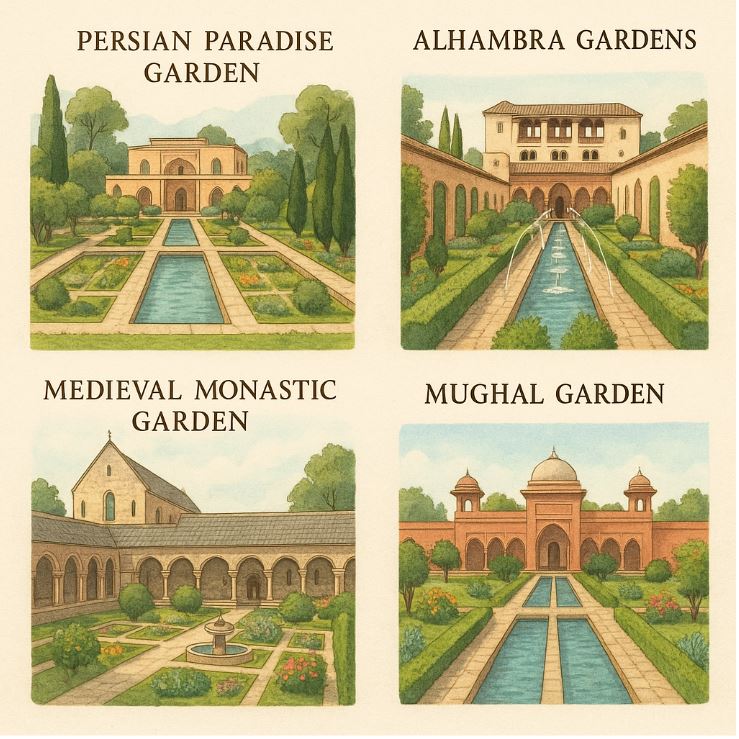
Historic Aristocratic Gardens
🕌 Persian Paradise Garden
- Region: Ancient Persia (Iran)
- Key Feature: Symmetrical layout with central water channel and reflecting pool
- Purpose: A physical representation of paradise—order, refreshment, and divine harmony
🏰 Alhambra Gardens
- Region: Moorish Spain (Granada)
- Key Feature: Long water canals, arches, and fountains within palace walls
- Purpose: Royal retreat blending Islamic aesthetics with natural serenity
⛪ Medieval Monastic Garden
- Region: Europe (Middle Ages)
- Key Feature: Enclosed cloisters with herb and flower beds
- Purpose: Healing, prayer, and self-sufficient living for religious communities
🏞 Mughal Garden
- Region: India (Mughal Empire)
- Key Feature: Fourfold (charbagh) layout with water channels and red sandstone walls
- Purpose: Symbolized heaven on earth—blending Persian and Indian cosmology
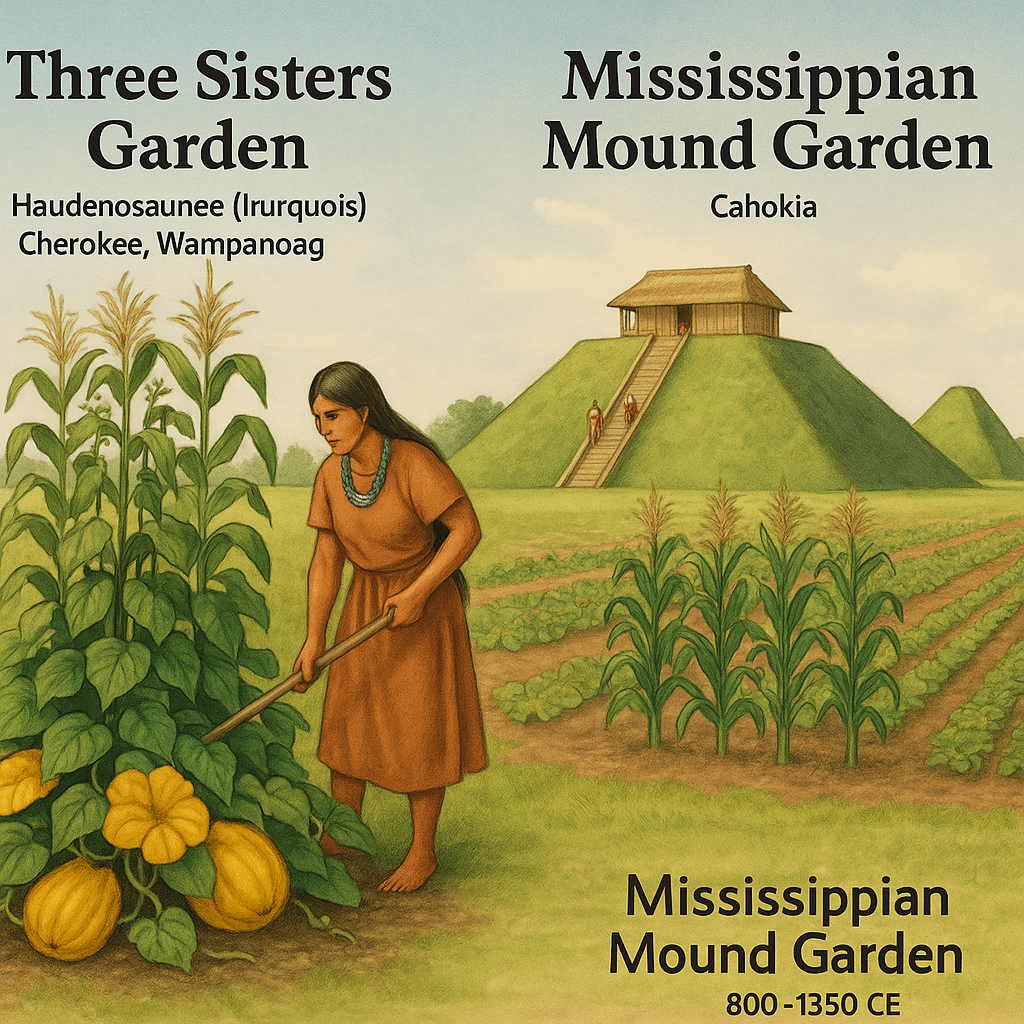
Beyond imperial splendor, however, gardens have also served to stabilize communities, preserve knowledge, and nourish shared life in deeply rooted Indigenous traditions:
Communal Indigenous Gardens
🌽 Three Sisters Garden
- Cultures: Haudenosaunee, Cherokee, Wampanoag
- Key Feature: Corn, beans, and squash grown together in mounds (companion planting)
- Purpose: Provided balanced nutrition and structured community foodways
- Symbolism: Harmony through interdependence—each plant supporting the others
⛰ Mississippian Mound Garden
- Cultures: Cahokia, Etowah (~800–1350 CE)
- Key Feature: Croplands and medicine plots near ceremonial earthen mounds
- Purpose: Supported large urban populations with civic and spiritual focus
- Symbolism: Fertility, sacred order, and alignment with celestial cycles
As we reflect on the shifting reality of land access and cultural memory, a question arises:
Will gardens remain elite sanctuaries, or can they become shared spaces of rooted belonging once again?
 Ancient Refuge
Leave a comment